A New Mexico CPR story shared by Sandoval County offers a practical reminder of why making time for training matters: a resident used skills learned in a county-sponsored class to help a loved one before emergency responders arrived, and the county reported that the patient was doing well. (Sandoval County’s account) The useful question for the rest of us is simple: what would help us be ready in the same situation?
A New Mexico CPR story that starts before the emergency
According to the county, the resident had attended CPR training just weeks before the emergency and began CPR immediately after the 911 call, continuing until the EMS team arrived. (Sandoval County) This was not a story about waiting for someone else to take responsibility; it was about a bystander putting recent training to use.
The county described how paramedics stabilized the patient before transport to a local hospital. (Sandoval County) That distinction matters: the bystander’s actions were one part of a larger emergency response, not a substitute for professional care.
Why the chain of survival matters
The American Heart Association’s adult out-of-hospital chain of survival connects recognition and calling 911, early CPR, rapid defibrillation, advanced resuscitation, post-cardiac arrest care, and recovery. (American Heart Association) Think of readiness as a team effort rather than a single heroic moment.
For an Albuquerque-area workplace, consider using your next staff meeting for a short planning exercise. Ask who would call 911, who would retrieve the AED, and who would help responders find the person who needs care; then identify any gaps you would like to practice in training.
The AHA recommends training enough people in CPR and AED use that someone is available to respond, and making sure employees know where the devices are located. (AHA AED program checklist) A useful next step is to compare that advice with your actual staffing pattern, including evenings, weekends, and employee turnover.
Turn inspiration into a practical plan
Here is a planning exercise you can use at home or at work. It is not a clinical protocol or a replacement for a CPR class.
- Start with people: Make a list of family members or coworkers who want training, including new employees.
- Walk the space: Can everyone point to the AED, if you have one, and explain how to reach it?
- Review the equipment: Assign responsibility for checking your device according to its manufacturer’s instructions, as recommended by the AHA. (AHA AED program checklist)
- Pick one next action: Choose a class, arrange a group-training conversation, or review your emergency response plan.
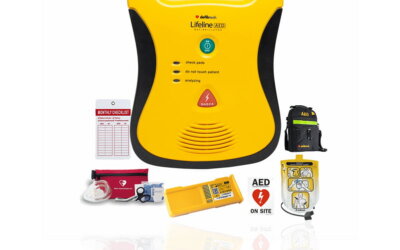
If you are comparing options, start with our CPR, AED, and first aid courses. For equipment planning, you can also explore our AEDs, pads, batteries, cabinets, and accessories.
Make time before you need the skills
The Sandoval County story is encouraging because it connects a training decision with a real emergency response. It also gives each of us a manageable next step: move CPR preparation from “someday” onto the calendar.
Find your next Care Tactics CPR class, or call 505-585-1533 to discuss training for your group. Tell us who you need to train so we can help you explore the options.
Educational information, not individualized medical advice or a certification course. In a U.S. emergency, call 911 and follow dispatcher instructions. Care Tactics CPR did not participate in the rescue described here; the incident summary is attributed to Sandoval County.