
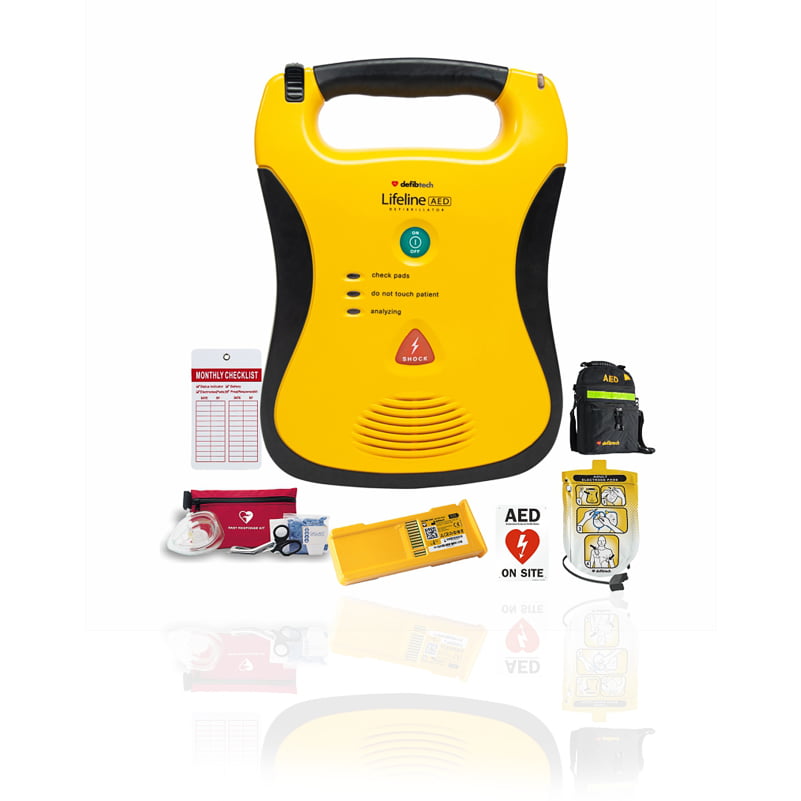
An AED readiness checklist gives New Mexico workplaces a useful question to answer before an emergency: is our device accessible, maintained, and part of a response plan? The American Heart Association recommends an AED program that combines equipment selection, placement, employee training, awareness, and ongoing maintenance. (AHA AED program checklist) Buying a device is the beginning of that conversation, not the end.
Your workplace AED readiness checklist
Use the prompts below to organize a discussion with the person responsible for your AED. The inspection requirements for your exact device still come from its manufacturer, not from a generic blog checklist.
Know the exact device
Start your equipment record with the manufacturer, model, serial number, and manual location. Add the supplier contact and the employee responsible for follow-up so the next person is not starting from scratch.
The Red Cross advises owners to follow the manufacturer’s maintenance instructions and understand how the AED indicates readiness or a problem. (American Red Cross AED maintenance guidance) Keep the manual available to the people who perform those checks.
Check the status indicator and battery
Readiness indicators vary: the Red Cross notes that AEDs may use visual symbols, lights, or audible warnings, and recommends checking that the battery is properly installed and within its expiration date. (American Red Cross) Do not assume that one brand’s lights or maintenance intervals apply to another model.
For your internal record, consider documenting the check date, the observed indicator, and any follow-up. If a check identifies a concern, use the manufacturer’s instructions and your workplace policy rather than treating the checklist as permission to keep using the device.
Inspect pads and replacement supplies
The Red Cross recommends keeping pads adequately stocked, sealed, and within their expiration date, while the AHA recommends extra electrode pads so used ones can be replaced promptly. (American Red Cross; American Heart Association) Make checking the printed dates a specific task, rather than relying on someone to remember the purchase year.
Before ordering, compare your device’s exact model and part information with the replacement item. If you are unsure which item to select, contact us with the model and part number instead of guessing from the product photograph.
Check access, signs, and staff awareness
The AHA recommends visible, easy-to-access AED locations, clear signs, and communication so employees know where devices are and who is trained to use them. (AHA AED program checklist) Try a simple walk-through with a new employee and note any access questions you want to resolve.
Include your own opening hours, staffing pattern, and building layout in that conversation. An Albuquerque office, a Santa Fe community organization, and a Rio Rancho workplace can each use the same planning questions without assuming their buildings have the same needs.
Plan for upkeep after a rescue, too
After an AED is used, the Red Cross recommends restocking supplies and confirming that the device is in proper working order before returning it to service. (American Red Cross) Put responsibility for that follow-up in your plan before anyone needs to use it.
The AHA also recommends checking relevant state requirements and any applicable registration or reporting obligations when setting up an AED program. (American Heart Association) This article is not a determination that your organization meets New Mexico legal requirements.
Find equipment and training together
Explore our AEDs, pads, batteries, cabinets, and accessories, then compare your needs with our CPR and AED training options. Our equipment checkout serves hand-delivery addresses within Albuquerque, Santa Fe, and Rio Rancho city limits, with no shipping charge and applicable NM GRT added at checkout.
Shop AEDs and accessories, or call 505-585-1533 with your equipment questions. Let us know the exact model you are working with so we can discuss the right next step.
General educational and purchasing information, not medical or legal advice. Follow the manufacturer’s current instructions for your exact AED and consult qualified professionals about your organization’s requirements. In an emergency, call 911.